
Dry Odor Removal Units: Solving Industrial Odor Problems Without Water
Most facilities don’t go looking for a “dry odor control adsorber” — they go looking for a fix to a specific, urgent problem: neighbors complaining, workers uncomfortable, an odor audit flagging a compliance issue, or a regulator asking pointed questions about the smell coming off-site. A dry odor removal unit is the equipment that solves that problem, pulling hydrogen sulfide, mercaptans, ammonia, and other odorous compounds out of exhaust air using solid adsorbent media — no water, no chemical dosing, no wastewater stream to manage afterward.
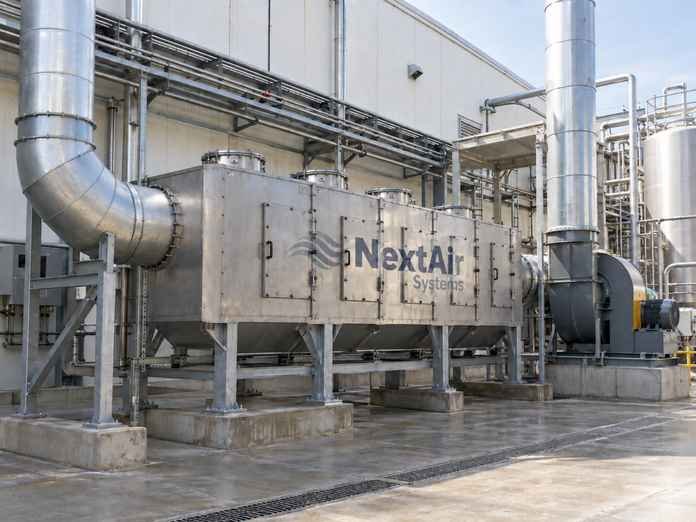
This guide covers where industrial odor problems actually come from, why you can smell trouble long before it’s dangerous, how a dry odor removal unit solves it, and how to choose the right one for your facility — whether that’s a wastewater treatment plant, a food processing site, or a waste management facility across the Middle East, Africa, or India.
Where Industrial Odor Problems Actually Come From
Wastewater and sewage treatment. This is the single largest source of industrial odor complaints, and the largest market for dry odor removal units. Odor-generating points span the entire treatment process: headworks (screening and grit removal), primary clarifiers, aeration basins, sludge thickening, anaerobic digesters, and biosolids dewatering — each releasing hydrogen sulfide and related reduced-sulfur compounds as sulfate-reducing bacteria break down organic material under low-oxygen conditions.
Food processing. Rendering, meat and fish processing, dairy operations, and other food processing facilities generate strong organic odors from raw material handling, processing residues, and wastewater pretreatment — often requiring dedicated exhaust treatment separate from any process ventilation.
Waste management and landfills. Solid waste transfer stations, landfills, and composting operations generate odor from ongoing organic decomposition, frequently alongside the same hydrogen sulfide and ammonia compounds found in wastewater applications.
Chemical and industrial processing. Manufacturing processes involving solvents, resins, and various chemical intermediates can generate VOC-driven odor problems requiring exhaust treatment before discharge.
Understanding H₂S: Why You Can Smell It Long Before It’s Dangerous
Hydrogen sulfide — the “rotten egg” gas behind most wastewater and organic-decomposition odor complaints — has an extraordinary gap between what your nose can detect and what’s actually dangerous. The human nose registers H₂S at roughly 0.5 to 8 parts per billion. Regulatory safety limits, by contrast, are measured in parts per million — a gap of three to four orders of magnitude. That means a facility can be generating a genuine nuisance-odor complaint from a concentration thousands of times below any health-based exposure limit.
| Concentration | Effect / regulatory reference |
|---|---|
| 0.5–8 ppb | Human odor detection threshold |
| 1 ppm (8-hr TWA) | ACGIH threshold limit value |
| 10 ppm | NIOSH recommended exposure limit (ceiling) |
| 20 ppm (ceiling) | OSHA permissible exposure limit |
| 50 ppm (10-min peak) | OSHA peak exception limit |
| 100 ppm | NIOSH immediately dangerous to life or health (IDLH) threshold |
| 200–300 ppm | Can cause unconsciousness within minutes |
| 700–1,000 ppm | Rapidly fatal |
There’s a dangerous twist here too: at high concentrations, H₂S causes rapid olfactory fatigue — the gas deadens your sense of smell, so the warning signal disappears exactly when the danger is highest. This is why H₂S is the second most common cause of fatal gas inhalation exposure in the workplace, and why odor complaints at a facility should never be dismissed as “just a nuisance” without proper gas monitoring — the same compound driving neighbor complaints at parts-per-billion levels is genuinely hazardous at parts-per-million levels in confined spaces.
How a Dry Odor Removal Unit Solves This
A dry odor removal unit draws contaminated air through a bed of solid adsorbent media — typically activated carbon, sometimes chemically enhanced to target specific compounds like hydrogen sulfide — and releases clean air out the other side. No liquid chemicals, no water, no wastewater byproduct to treat or dispose of. For the full technical explanation of how the adsorption chemistry works and how systems are engineered and sized, see our companion guide to dry odor control adsorbers.
Choosing the Right Odor Removal Unit for Your Facility
Wastewater treatment plants typically need units matched specifically to hydrogen sulfide and, depending on the treatment stage, mercaptans and ammonia — headworks and digester applications often carry the highest concentration loads on-site.
Food processing facilities frequently deal with a broader mix of organic odor compounds and may need multi-stage or dual-media configurations rather than a single-compound-optimized unit.
Waste management and landfill sites generally need units sized for sustained, moderate-concentration hydrogen sulfide and ammonia loads across continuous operation.
Chemical and industrial sites typically need units matched to the specific VOCs present in their process exhaust, which may call for a different base media entirely than compounds found in organic-decomposition applications.
In every case, the right unit is matched to your specific compounds and concentrations — not simply sized by airflow alone.
Why Dry Odor Removal Makes Particular Sense in Water-Constrained Regions
Wet chemical scrubbers — the main alternative to dry adsorption — need a continuous water supply and generate a wastewater stream requiring treatment or disposal. Across much of the Middle East and significant parts of Africa, water availability is a genuine operational constraint, and wastewater discharge permitting adds cost and complexity that a dry system simply avoids. As wastewater treatment, food processing, and industrial capacity expand across these regions and India, a dry odor removal unit increasingly represents the more operationally sustainable choice — not adding a second water-consuming process to a facility that may already be managing water constraints elsewhere.
The Cost of Ignoring Industrial Odor
- Neighbor and community complaints. Persistent odor complaints can escalate to regulatory investigation, fines, or in serious cases, restrictions on facility operations or expansion.
- Regulatory and compliance exposure. Many jurisdictions have specific odor emission or nuisance regulations, and facilities near residential areas face particular scrutiny.
- Worker health and retention. Beyond nuisance, uncontrolled H₂S and other odor compounds represent a genuine occupational health issue, particularly in confined or poorly ventilated areas.
- Brand and community reputation. For facilities operating near residential or commercial areas, a reputation for odor problems can affect community relations and future permitting or expansion approval.
Solving Odor Problems the Right Way
A dry odor removal unit solves the actual problem — persistent, complaint-driving, potentially hazardous odor compounds — without adding water consumption or wastewater management to your facility’s operational burden. Getting it right means matching the unit to your specific odor source, compound mix, and concentration, not just picking equipment off a spec sheet by airflow rating. For the underlying adsorption technology and engineering detail behind these recommendations, see our guide to dry odor control adsorbers.
Frequently Asked Questions
Why do I get odor complaints if my facility is within safety limits?
Because the human nose detects hydrogen sulfide at concentrations thousands of times lower than any occupational safety limit — a facility can be fully compliant with health-based exposure standards and still generate genuine, detectable nuisance odor at the property line.
What's the difference between a dry odor removal unit and a wet scrubber?
A dry odor removal unit uses solid adsorbent media with no water or liquid chemicals involved, avoiding wastewater generation entirely; a wet scrubber uses a recirculating liquid (often chemically dosed) to absorb pollutants, which is effective but requires a continuous water supply and generates a wastewater stream needing treatment or disposal.
Which industries need dry odor removal units most?
Wastewater and sewage treatment is the largest application by volume, followed by food processing, waste management and landfill operations, and various chemical and industrial processing facilities with VOC-driven odor issues.
Is hydrogen sulfide dangerous or just unpleasant?
Both, depending on concentration — at the parts-per-billion levels that trigger nuisance complaints, H₂S is primarily an odor and comfort issue; at parts-per-million concentrations, particularly in confined spaces, it becomes a genuine occupational health hazard, and high concentrations cause dangerous olfactory fatigue that removes your ability to smell the gas as a warning sign.
Talk to Our Engineering Team
Call +91-9311805618 or use our contact form for a facility-specific recommendation.
Contact Us